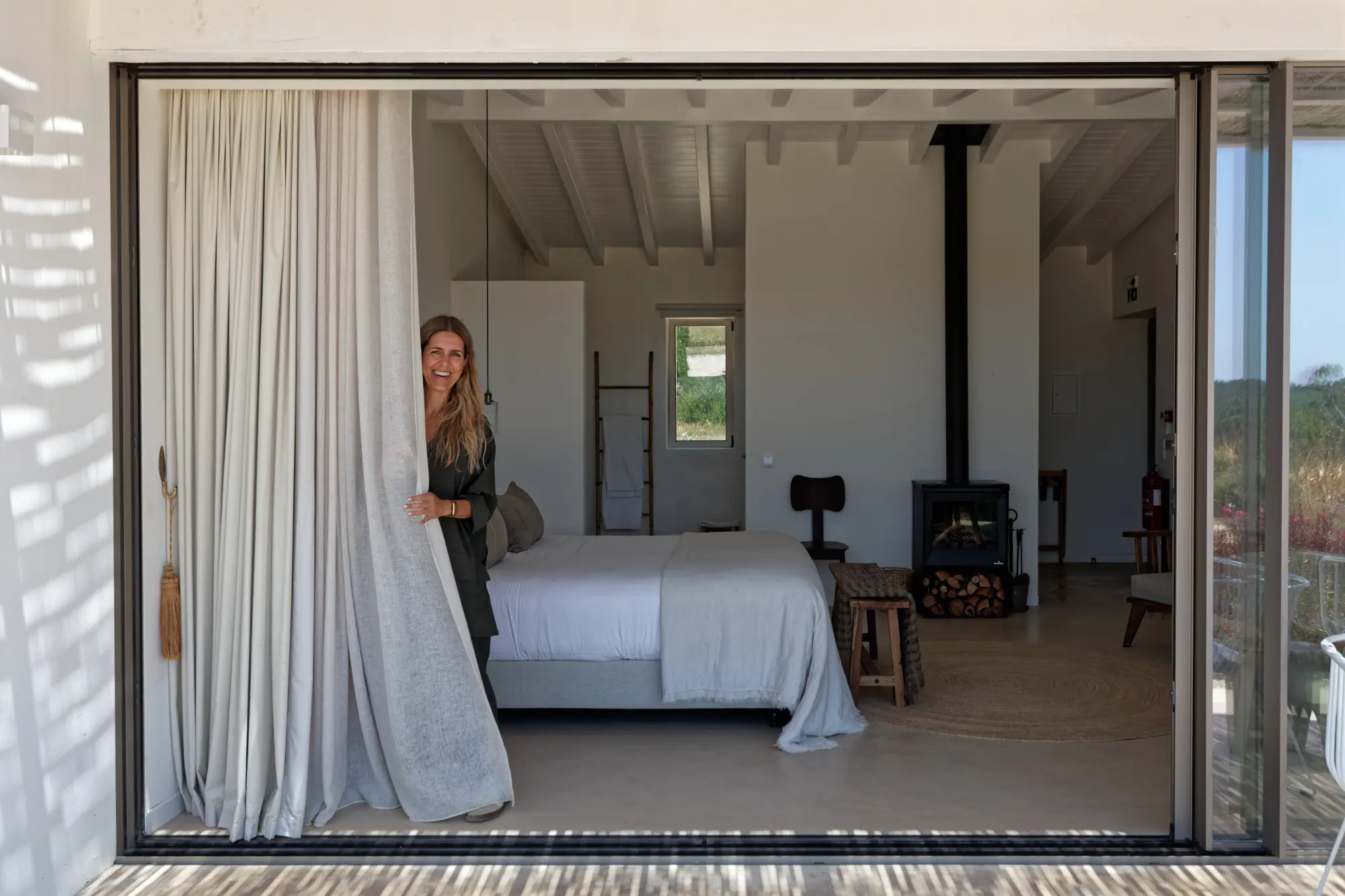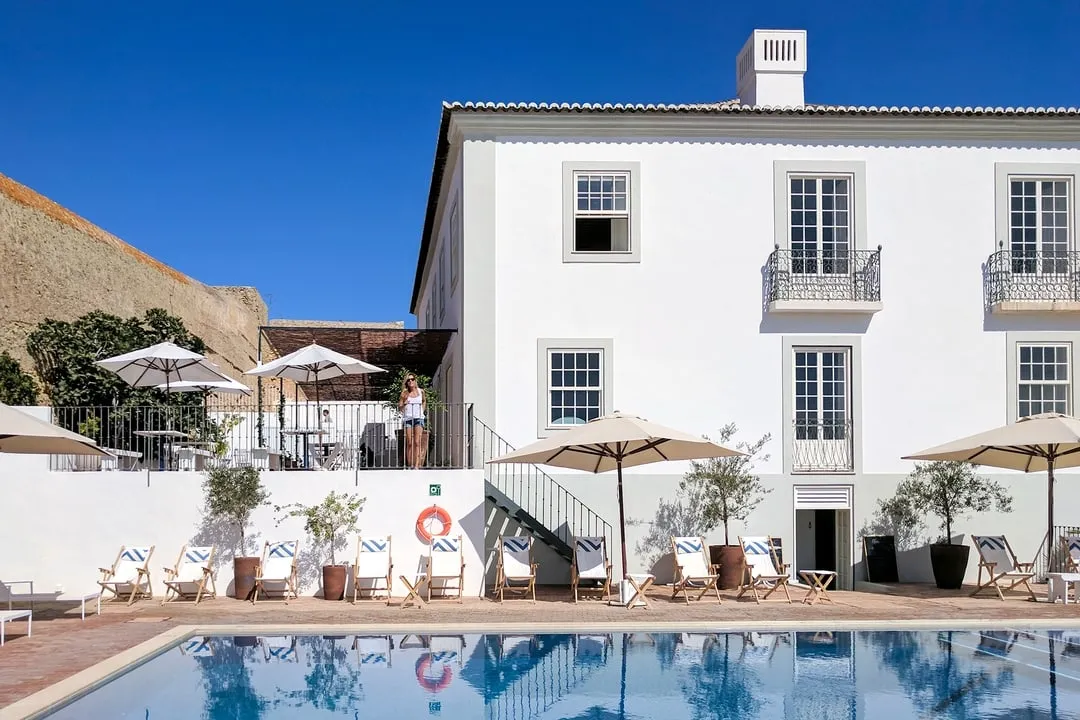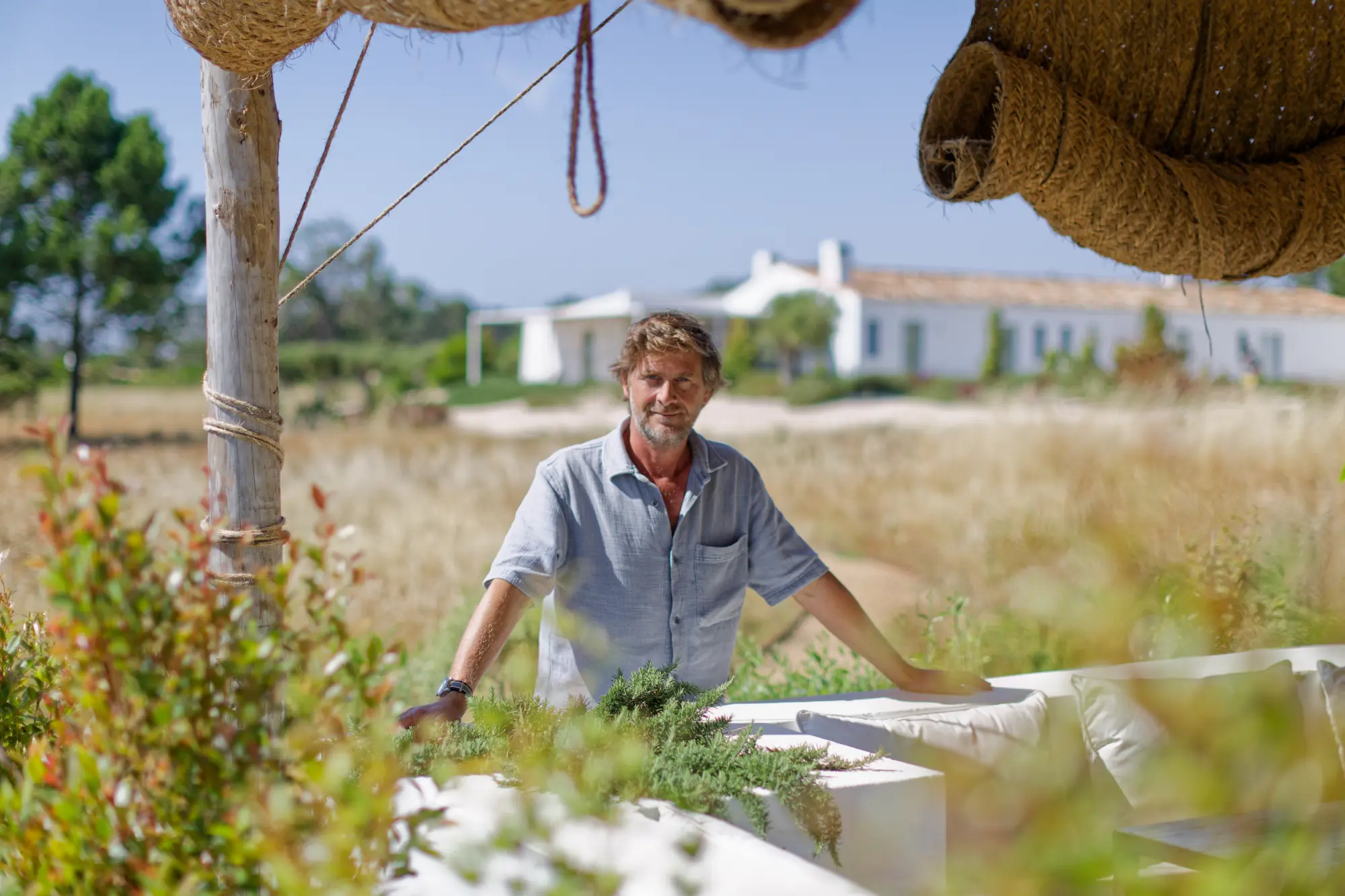
Nuno and Phoebe swapped city life for this protected stretch of Atlantic coast between Odeceixe and Aljezur, a place so untouched that nothing new can be built here, only old farm ruins rebuilt.
Nuno started visiting and falling in love with Costa Vicentina when he was still a young teenager. In 2016, he discovered and bought this property, and a year later he moved into the habitable part of the ruined farmhouse, where he lived for a couple of years. It was something he felt was necessary to truly understand the land and help bring his vision for it to life.
Our first visit to Amaria was in June 2026, and we were immediately taken with the quiet of it: birdsong at breakfast, the wood-burning sauna, and a vegetable garden feeding the table. We also had many good conversations with Nuno during our stay.
Here's the story behind Amaria.
"This region had been calling me for several years."
Nuno Avillez Oliveira, owner of Amaria
We loved our stay at Amaria. Was creating a hotel something you'd been thinking about for a while?
Yes, it was something I started thinking about ten years before we actually opened. I wanted to change my lifestyle and to be closer to nature, in the Aljezur area of Costa Vicentina. I wanted to get back to basics — a purer essence of life — and I always liked hospitality at this level. I was looking for somewhere where I could realise my dreams and put my experience into practice: through architecture, landscape and the concept I had idealised, and to share it with guests.
How did you come across this land, and what drew you to it?
This region had been calling me for several years. For more than ten years I studied the region of Aljezur, Costa Vicentina. When I found the land that Amaria sits on, there was no question about it. It's beautiful — the location, the proximity to the ocean, the flora, the abundance of water on the land. The potential was undeniable. And the old farm I found here had all the ingredients we needed to transform into Amaria.
You often mention the love you've had for this region since you were young. What are your first memories of Costa Vicentina?
My first memories are immediately connected to the beautiful, raw and wild landscape, with the Atlantic Ocean so close by — to the smells and the sounds, and to the unique and varied beaches that punctuate the coastline. Nature here is at its purest. I was also always drawn to the authenticity that still exists here, in nearby villages and in the local community. The region is full of simplicity and in these crazy days we are living in it is still very authentic and discreet. It was a growing love process. Fishing is one of my greatest passions, so I spent many years in this region doing what I like most.
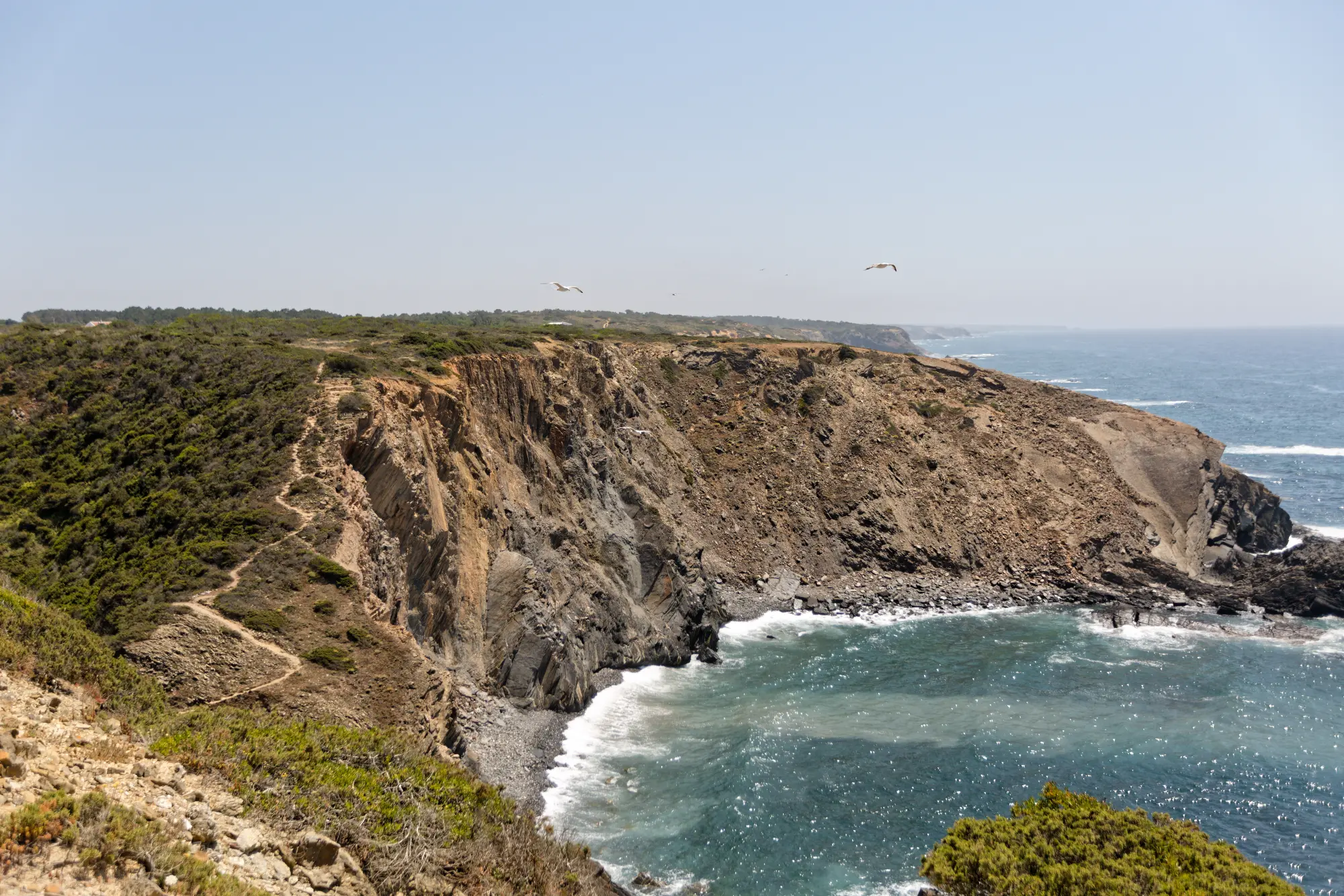
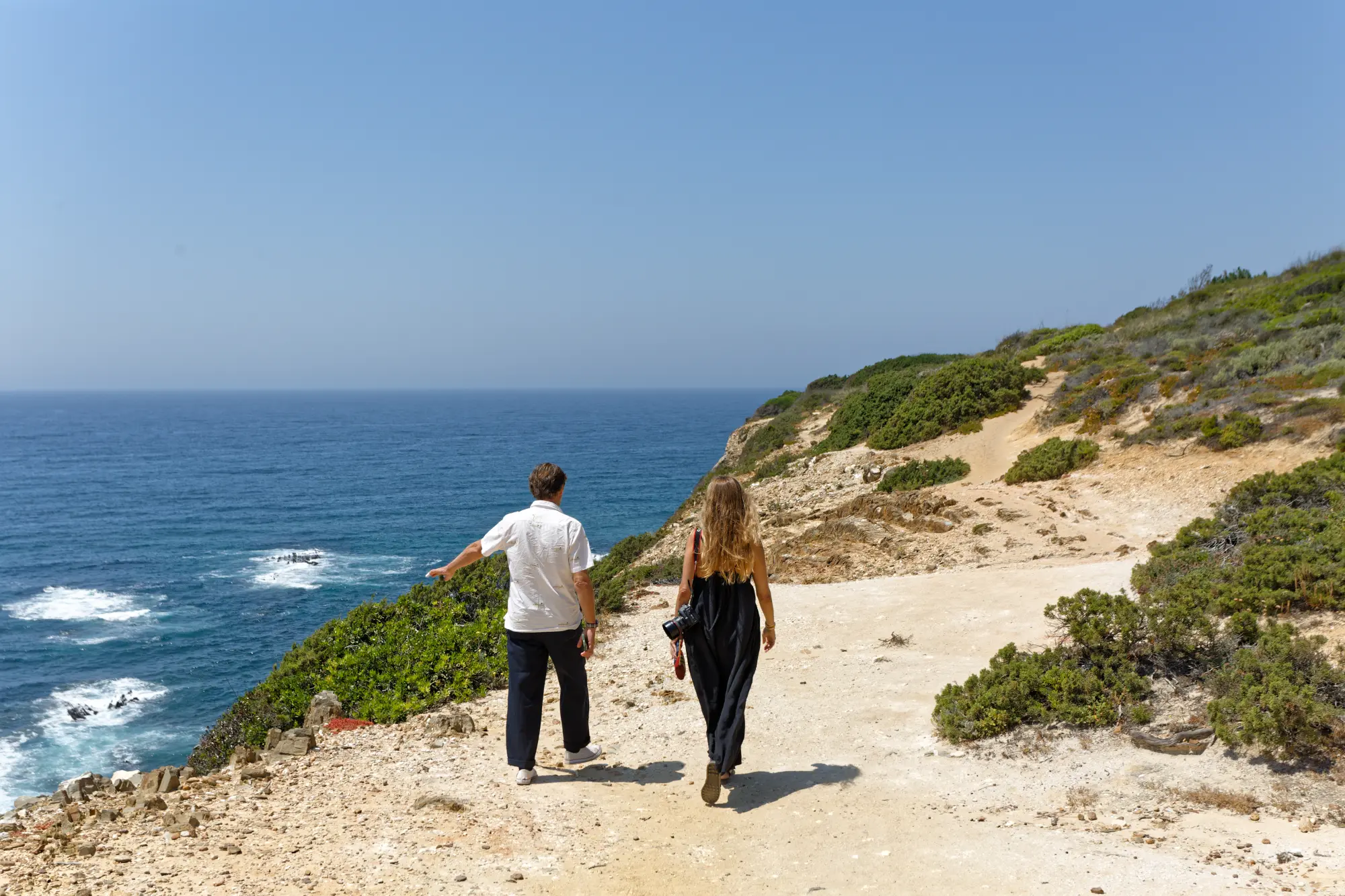
Nuno and Joana on the Fishermen's Trail, along the cliffs by Amaria.
The name Amaria carries a few meanings — your mother's name, the nearby village of Maria Vinagre, and the Portuguese word amar. How did you arrive at it?
We wanted to find a name full of meaning and sense, also a Portuguese name. Between friends the name came and we went straight to it. It means everything to us now — it gained presence — from my mother's name Maria, to the neighbouring village of Maria Vinagre, to the verb amar, or 'love' (Amaria literally translates as 'I would love to'). The three A's remind us of the hills of Monchique and Amaria also contains the word mar which means sea.
"Amaria literally translates as 'I would love to'."
Nuno Avillez Oliveira, owner of Amaria
Did you or Phoebe have any experience in hospitality before Amaria?
We didn't have any direct professional experience in the hospitality business but we both always liked to receive, to host and to create. I am an engineer and Phoebe worked in fashion. We knew what we wanted to do, and that we are both extremely dedicated, hard-working and passionate in the projects we take on, and that essence would be felt by our guests.
How do you split your tasks?
I've always been passionate about architecture, interior design and landscape and have a deep knowledge of the region (Costa Vicentina) and the local community. I take care of the operations, development and strategy, and I'm very much into the landscape — the regenerative processes of the land and the agricultural areas (our vineyards, vegetable gardens, fruit and olive trees). We are intensely committed to protecting our environment, and in positioning Amaria as a place that functions alongside the local community.
I've always travelled (as a guest) and I was always looking for nice small places, so in the end the little details that we experience we put them in action.
Phoebe has a natural way of communicating with our guests, always so captivating, and curating their experience during their stay, which makes us a perfect team. She is very much into gastronomy and has become an amazing chef in the last years. She coordinates and supervises the Amaria Kitchen, putting us on a level that feels contemporary and global whilst still being completely driven by our land and local producers. She manages commercial aspects including events, weddings, retreats, private groups, and the communications with our suppliers and external service providers. In addition, her creative background means that she takes care of most of our design and print materials. We have always been really unified in our vision for the brand and our identity.
"I spent two years living in part of the ruin, to understand the place: the light, the winds, the sounds of nature, and to feel the changing of the seasons."
Nuno Avillez Oliveira, owner of Amaria
Amaria sits on protected land where nothing new can be built, only existing ruins rebuilt. How did that constraint shape the design and the renovation?
Since Amaria is right inside the Natural Park, there are tons of restrictions regarding the architectural licence — so many that we almost went "crazy". It was a really difficult process, a great challenge — but restrictions only serve to encourage creativity, it made me driven. Once the main hurdles had been overcome, things really started to flourish.
In the end, for us, the main challenge was how to do something extraordinary without affecting the existence of the old building, its story, and the land. Our goal was to find a delicate and symbiotic way of adhering to the history and the hard rules, whilst developing the construction and our gardens with creativity and innovation.
Design and responsibility were the first measure, the pillar — we built before closing the concept. We studied the land, the history and the indigenous flora and fauna, to inform all our decisions, to uphold the best possible standards of sustainability. I spent two years living in part of the ruin, to understand the place — the light, the winds, the sounds of nature, and to feel the changing of the seasons. What you see today of Amaria is a natural extension of the original farmhouse and land.

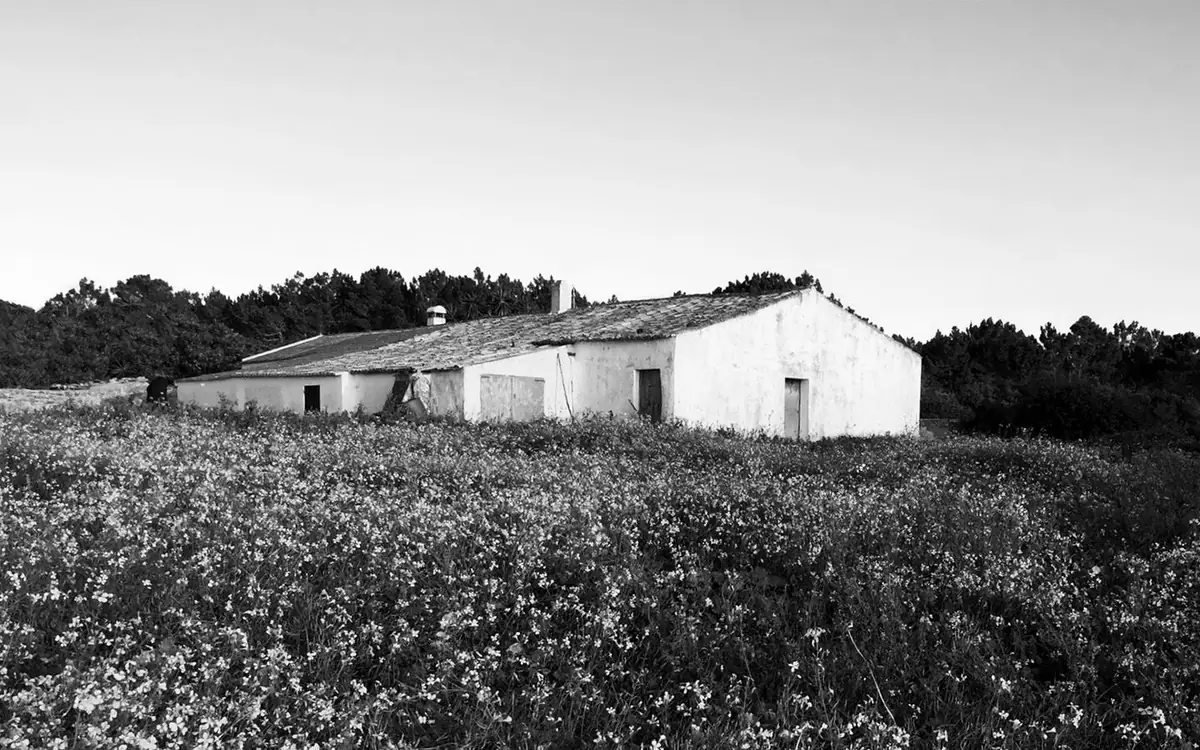
The original quinta ruins before Amaria was built, in Costa Vicentina Natural Park.
You've filled Amaria with beautiful furniture, objects and art. Where did it all come from?
My mother and I have been searching, buying and collecting for over ten years, from our family homes to the furthest corners of the globe. Many of the pieces are from my family, and many from travelling.
My mother took a decisive role in the selection and curation of the interiors and objects at Amaria, we did a great work together and we had a lot of fun. At times it was difficult to close our ideas and come to decisions, when there are so many options one can take, but in the end I think it was a great result — a sort of nice, beautiful, eclectic mess.
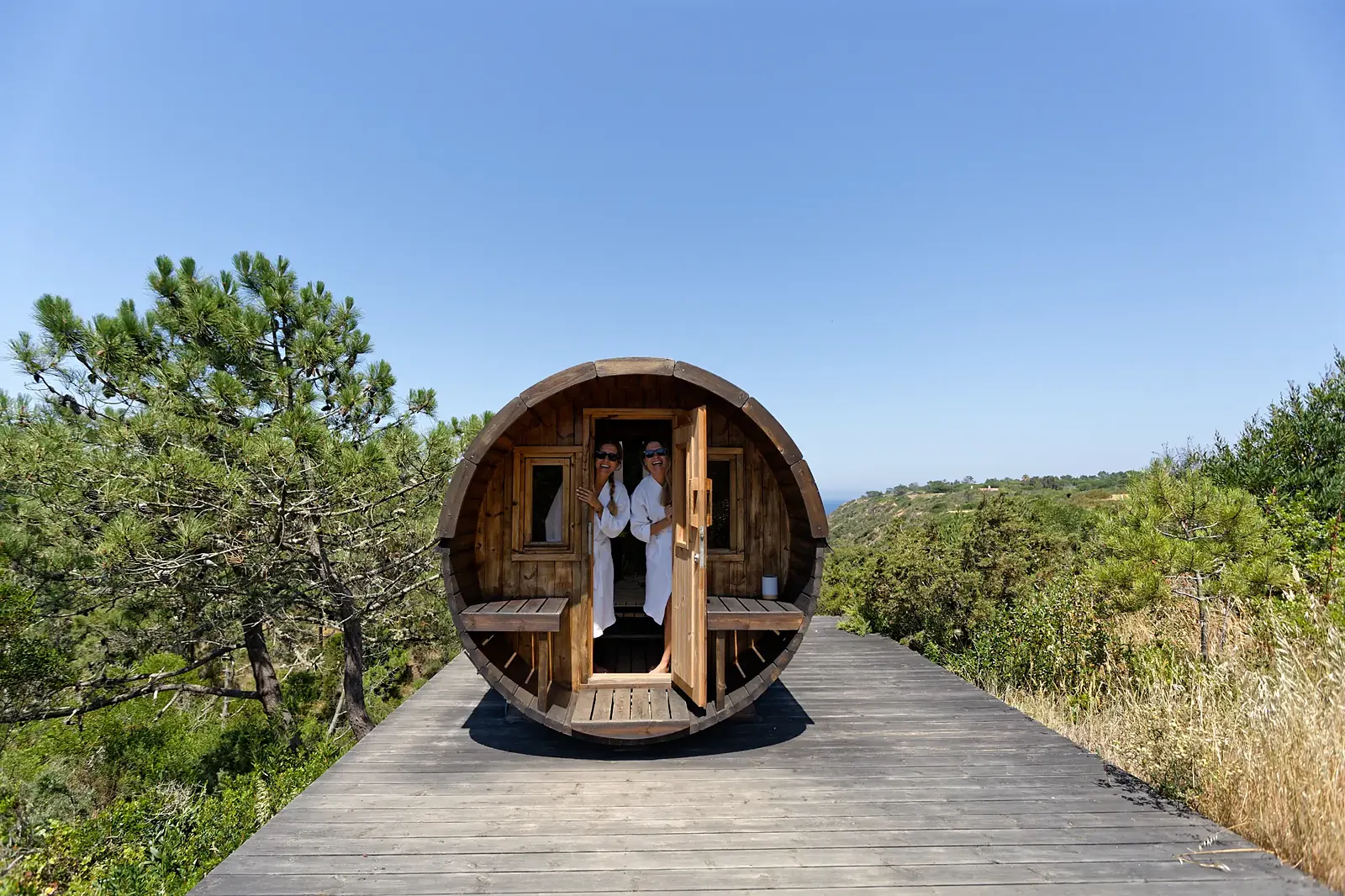
The sauna, with its stunning ocean view, turned out to be a real highlight. How did you choose that barrel design and its spot?
It was easy, the spot was calling for it! The barrel is a typically Nordic design, highly considered to be the best saunas you can get — our valley with a view to the sun setting over the Atlantic Ocean was the complement.
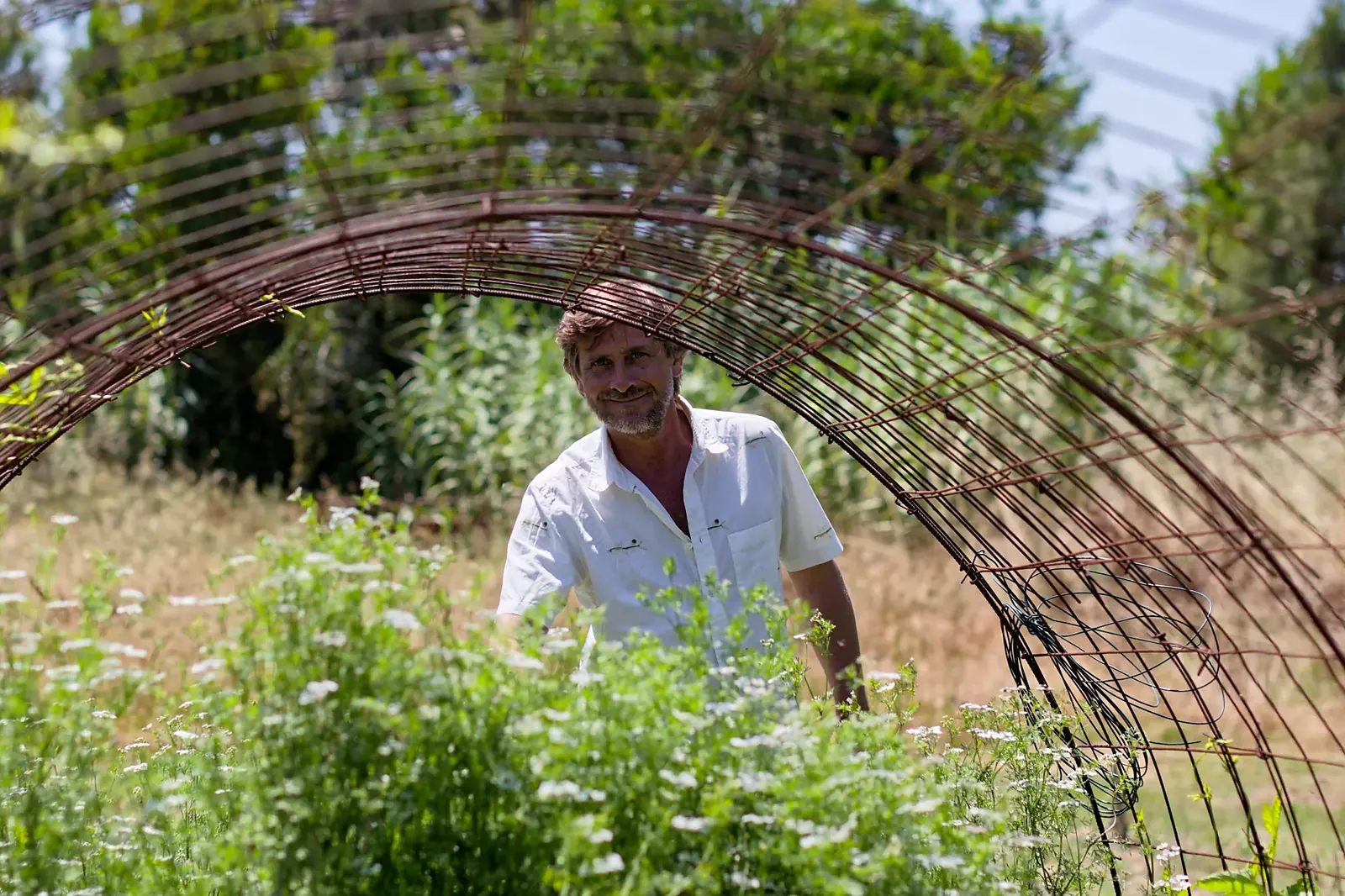
The vegetable garden, in which you are heavily involved, is impressive. Can you tell us about the farm and the thinking behind the table at Amaria?
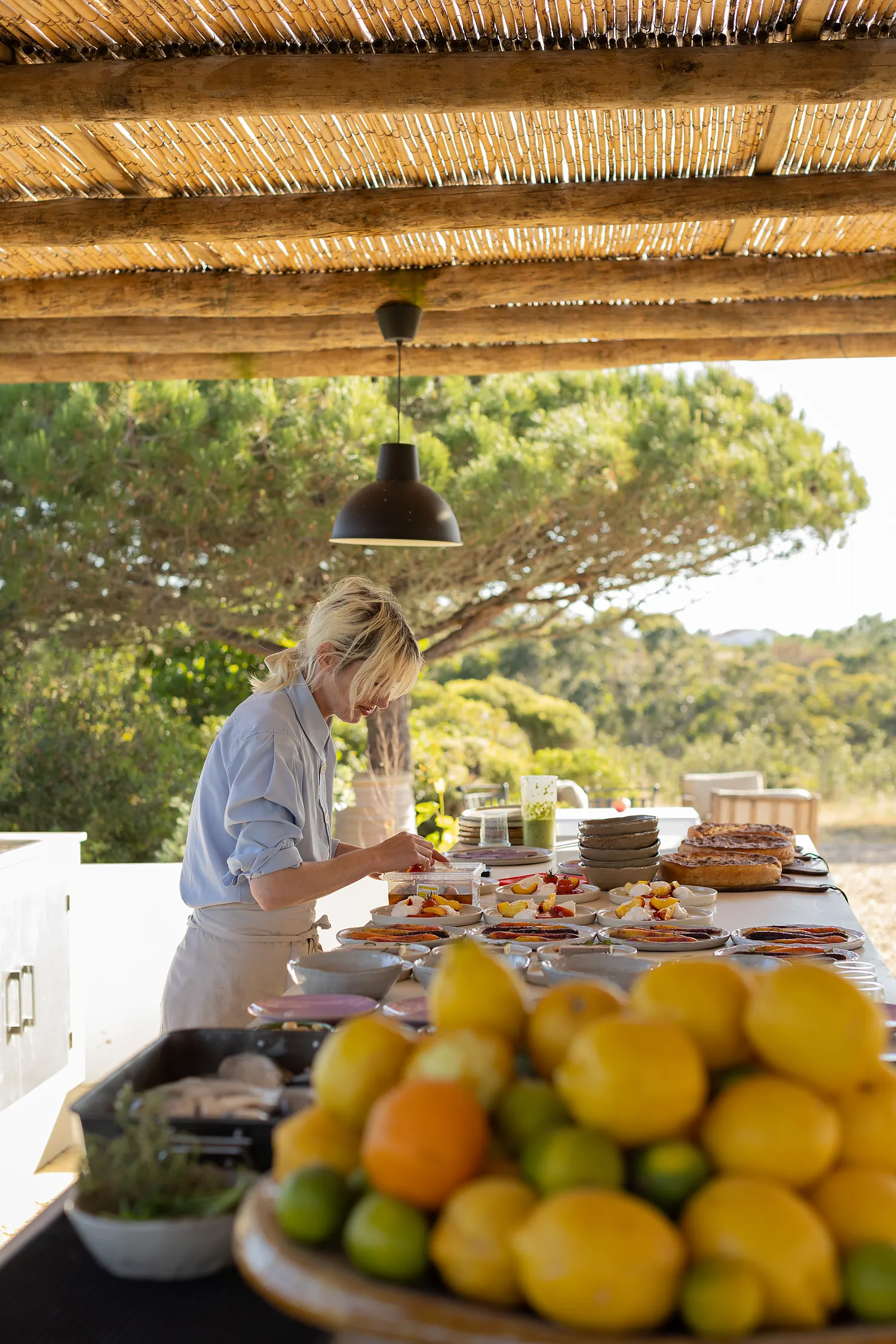
The concept is clear — soil to kitchen. To work in a responsible way with the land and create alongside nature. We studied a lot, asked a lot and we learned from the locals, with the history and traditions of our landscape. We are constantly learning by doing, trying new ideas, new produce, new rhythms — and Phoebe, she's a master in the kitchen, she creates menus according to what we have.
What have been the biggest challenges and rewards in creating and running Amaria?
To create something that works along with us (our dreams), to be involved and to contribute as much as we can to the local community and to work hard doing our best in all areas. There's no better feeling than receiving our guests (many become friends) and sharing this place. Their honest feedback that we created something really special, that is the greatest reward.
Some friends are coming to stay at Amaria for three days, their first time ever in Costa Vicentina. What do you tell them to do?
Amaria sits on the Fishermen's Trail, we always recommend taking a beautiful hike along the cliff tops — to Odeceixe Beach, one of Portugal's seven wonders, with a river that joins the sea; to visit the Bordeira / Carrapateira region with its exquisite hilltops, dunes and beautiful beaches; or to walk at low tide along Carrapateira Beach, with dramatic outcrops and rockpools full of marine species. For a snapshot of the local communities, history and traditions, both Aljezur and Monchique are wonderful villages to visit, with shops selling artisanal crafts and local produce, small museums and great restaurants. But we also invite our guests to do nothing except relax, listen to the waves crashing against the rocks below us, smell the esteva in the air, and join us for dinner in our pergola restaurant.
Do you have a favourite object at Amaria, where's it from and why is it special to you?
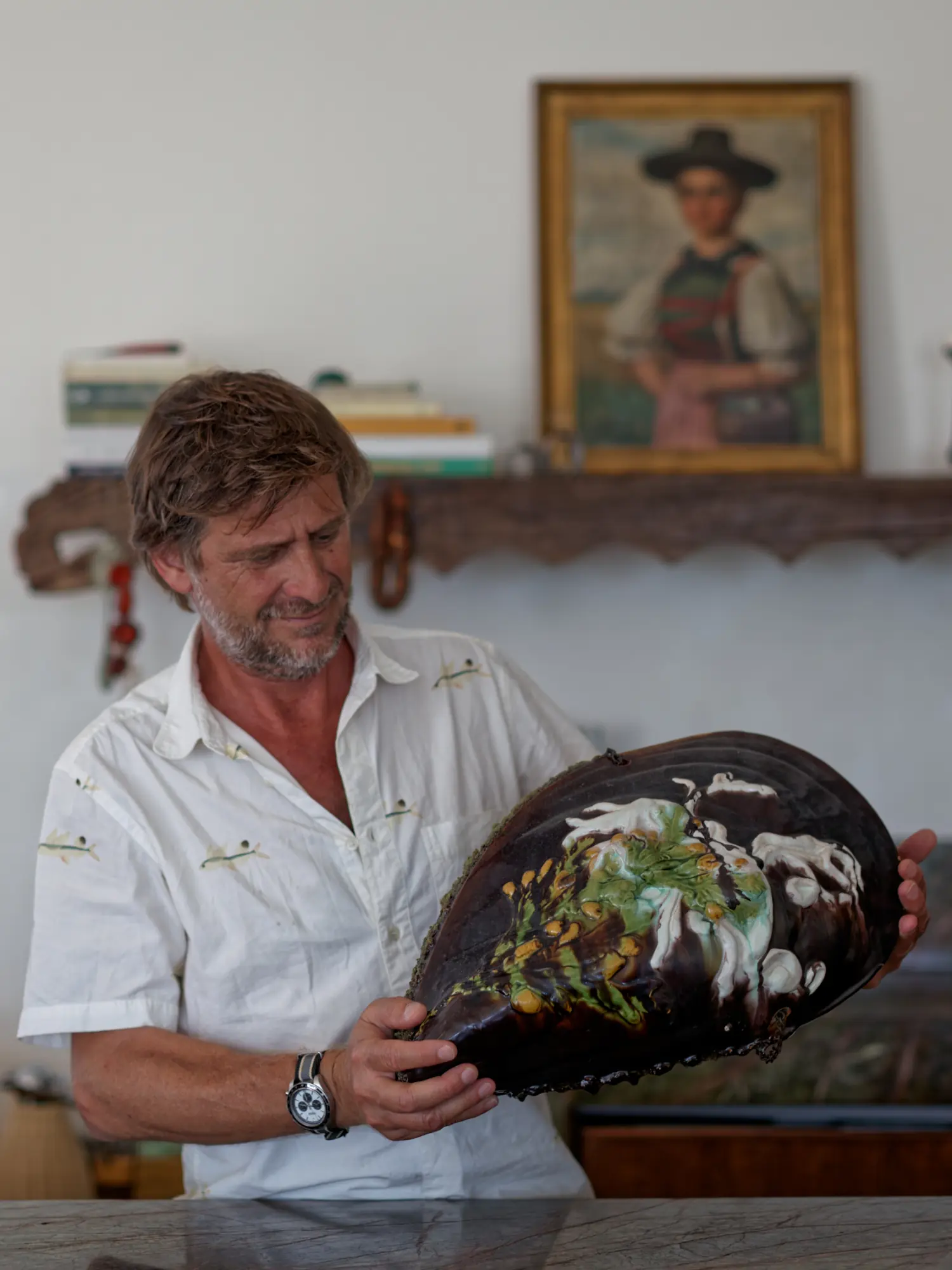
If I had to choose one object it would be a very old piece from Bordalo Pinheiro, a beautiful mussel shell, a first edition more than 100 years old. It was given from the last generations of my family to me. It's in the Amaria Kitchen.
"Do nothing except relax, listen to the waves crashing against the rocks below, smell the esteva in the air."
Nuno Avillez Oliveira, owner of Amaria
And to wrap it up, what's your favourite hotel in the world?
So many good memories. Babylonstoren in the Cape Winelands, I was invited to visit for the first time, almost 15 years ago and it was fascinating for me to see the concept, the structure, the Dutch influence that works so well. The most beautiful gardens. Top level curation.
Completely different in the region of Bahia, in Caraíva I recently visited a small five-bedroom place called Fazenda Ponta de Juacema, very exclusive and personal and away from everything. Absolutely fabulous with access to one of the best beaches I've ever seen.
Also a nice little hotel in Ojai, California, called Capri Hotel. Lovely little village with an amazing setting. A very unexpected stay — where again good memories and unforgettable experiences is everything.
Looking for boutique hotels in Portugal? Subscribe to our newsletter and be the first to discover our latest finds. Tag us on Instagram @joandso — we’d love to see where you stayed. 🙂
Obrigada,
Joana & Sofia
Please note that sometimes we use affiliate links and receive a small referral commission from sales, at no additional cost to you. Everything we recommend in our website is handpicked by ourselves and 100% because we like it. By booking through JO&SO you are supporting what we are doing, helping us to keep running the website. For more details read our disclaimer.